
The prevention argument, on paper, is won.
The evidence is clear: chronic disease is preventable, often reversible if caught early, and exponentially cheaper to address upstream than downstream. The IWBI data I work with shows that built environment interventions alone can reduce cardiovascular risk markers by meaningful percentages. The NHS spends roughly 70% of its budget on conditions that are, in a significant proportion of cases, preventable. This isn't contested.
And yet.
Every healthtech founder building in the prevention space runs into the same wall. Commissioners who are interested but can't find a budget line. Investors who believe the thesis but want to see reimbursement pathways before they'll commit. Health systems that say they want to shift left but whose procurement frameworks are designed entirely around episodic treatment.
The argument is won in every meeting room and lost at every contract signature.
── WHY THE PREVENTION ARGUMENT KEEPS FAILING ──
I've been thinking about this through the lens of system design rather than health policy, and I think the framing matters.
The problem isn't that decision-makers don't believe prevention works. Most do. The problem is that our health systems aren't designed to be rewarded for prevention. They're designed to be rewarded for activity — for treatments delivered, for procedures completed, for beds filled and emptied.
Prevention, structurally, looks like reduced demand. And reduced demand, in a system measured by activity, looks like failure.
This is the architectural problem underneath the prevention economy. It's not a science problem, not a technology problem, and not really a policy problem in the narrow sense. It's a fiscal design problem. The incentive structures, the measurement frameworks, the procurement criteria, all point in the wrong direction. The founders I work with who are making the most traction in this space aren't the ones making the best clinical argument. They're the ones who have found a way to make prevention legible within existing economic frameworks, to translate a ten-year population health outcome into a 12-month employer benefit, or a reduced acute admissions rate into a commissioner's saved budget.
That translation work is the commercial skill that doesn't get talked about enough.
── WHAT I'M WATCHING THIS WEEK ──
The Euronews Health Summit on 17 March is worth tracking if you're building into European markets. The agenda includes Europe's medical sovereignty question, the continent's dependence on US and Chinese pharmaceutical supply chains and R&D investment. This is a policy conversation that will have commercial consequences for founders in this space within 3-5 years. Worth knowing the shape of it now.
Also: the EHDS (European Health Data Space) formally enters application from 26 March. If you have EU-market ambitions and haven't looked at your data architecture against EHDS requirements, this month is the moment.
── ONE RESOURCE WORTH YOUR TIME ──
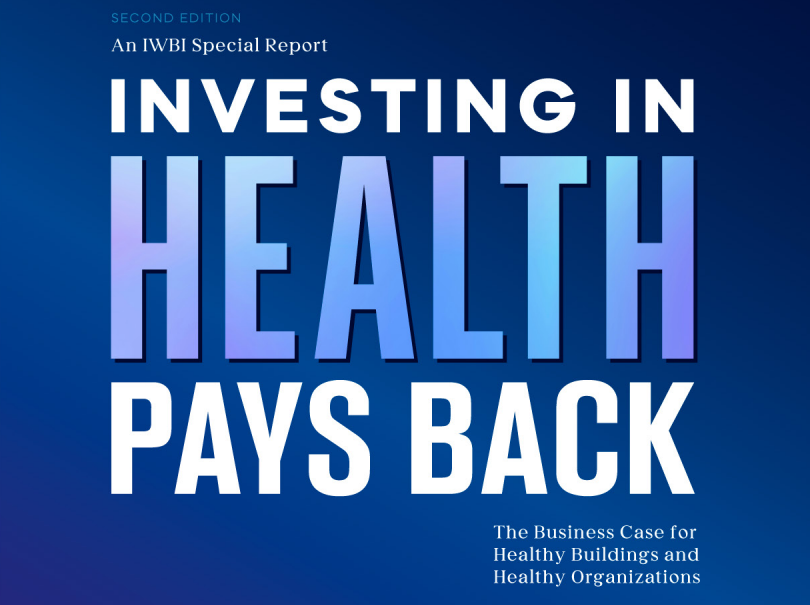
The IWBI Special Report: Investing in Health Pays Back (Second Edition) is the most rigorous quantification of built-environment health ROI I've seen. If you're making the economic case for prevention to investors or commissioners, the data in this report is useful ammunition. I'll link it below.
── A QUESTION FOR YOU ──
Where do you see the prevention argument losing? Is it at the evidence stage, the procurement stage, the reimbursement stage, or somewhere else entirely?
I read every reply. If you're seeing a pattern I'm not, I want to know about it.
Sara
─────────────────────────────────────────────
P.S. If you work with a healthtech founder who'd find this useful, forward it. The newsletter is free and always will be. They can subscribe at wellpurposed.com/newsletter


Responses